“True appreciation of landscape comes only when one is alive to both its beauty and its meaning”
–Fritiof Fryxell
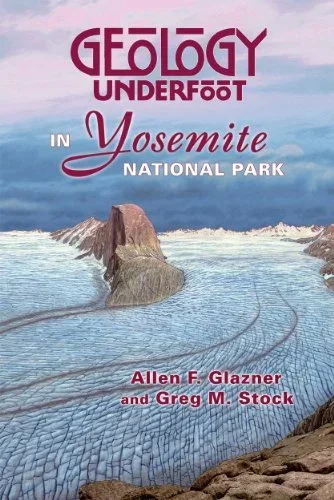
Back in 2007, I teamed up with Yosemite National Park Geologist Greg Stock in an attempt to recreate the famous view from Glacier Point as it might have appeared during the most recent ice age. This image later became the cover of Geology Underfoot in Yosemite National Park:
Nearly twenty years later, Greg brought together a team of geologists, designers, exhibit specialists and interpreters for a special Yosemite Conservancy project commemorating the 100th anniversary and renovation of the Glacier Point Geology Hut, an early example of the NPS rustic style of architecture. Located in one of the most inspirational settings imaginable, this is a view that leaves visitors positively begging for a geology lesson!
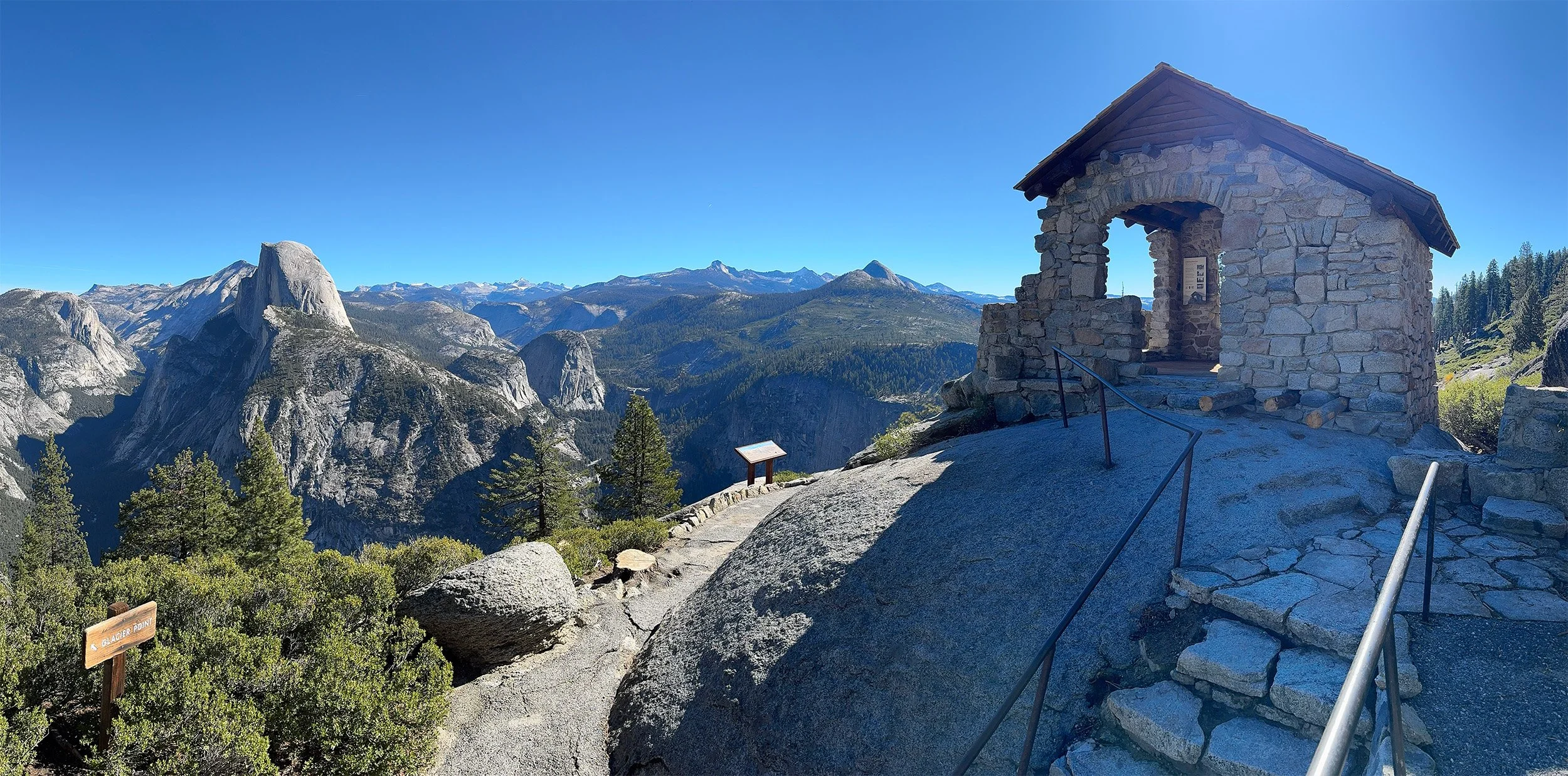
Photo: Eric Ball
And so in 2025, during a tumultuous time at NPS, we set out to tell the geologic story of Yosemite National Park.
The path to the hut takes visitors past this ‘peak finder’ panel, which includes a geology-related twist: a bare-earth LiDAR rendering that strips away the vegetation to reveal hidden landforms like floodplains, moraines, and talus slopes.
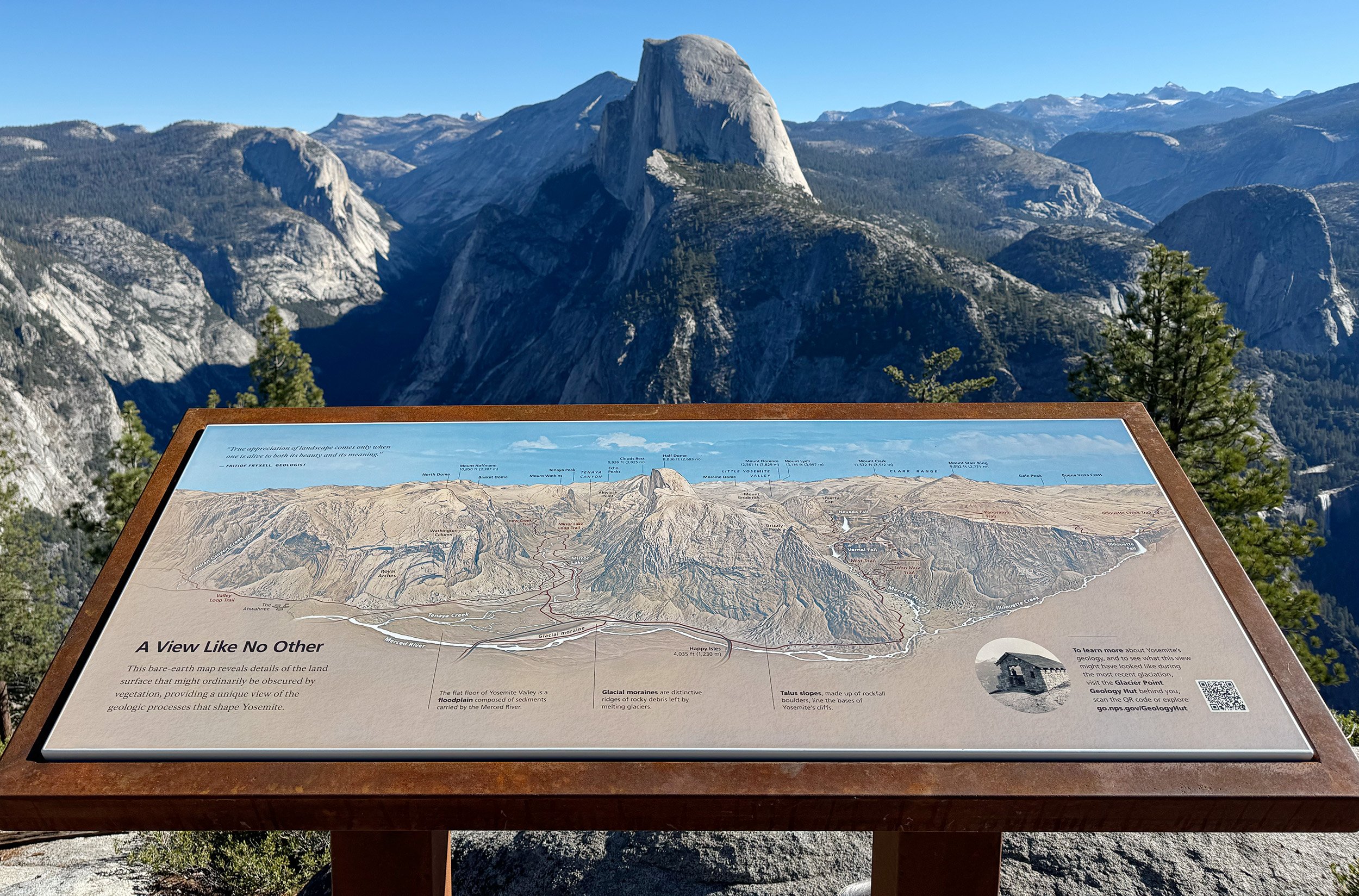
Photo: Eric Ball
Inside the hut, the new exhibit opens with this globe-style rendering of the ancestral Sierra Nevada, which involved building a DEM of plausible 100-million-year-old landforms, inspired by the prolific Ron Blakey and his amazing book Ancient Landscapes of Western North America.
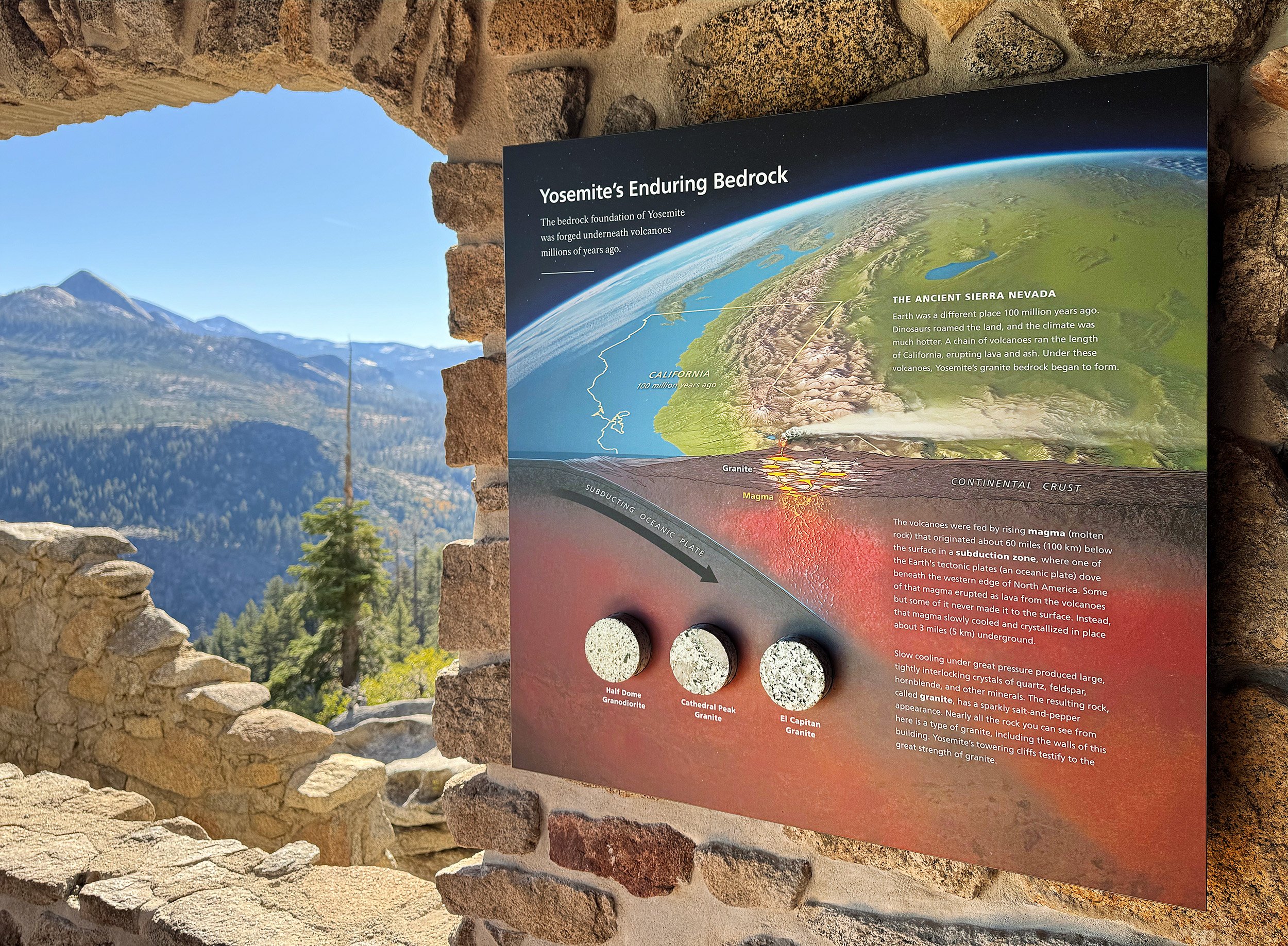
Photo: Eric Ball
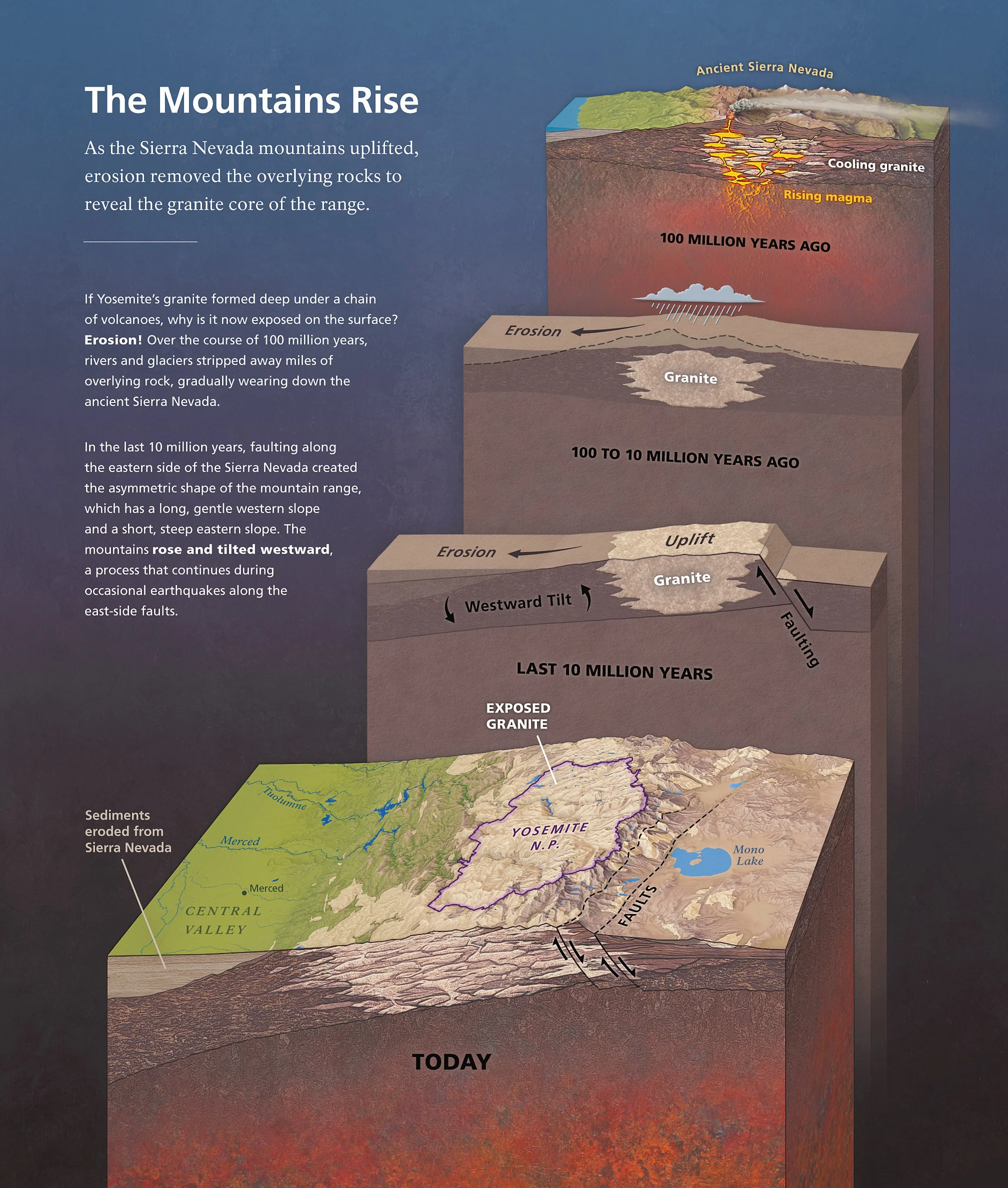
Geologists Allen Glazner and Kurt Cuffey helped describe the mountain-building processes at work in the Sierra Nevada in the most straightforward manner. This panel, for example, manages to condense 1oo million years of subterranean rumblings into a quick series of block diagrams:
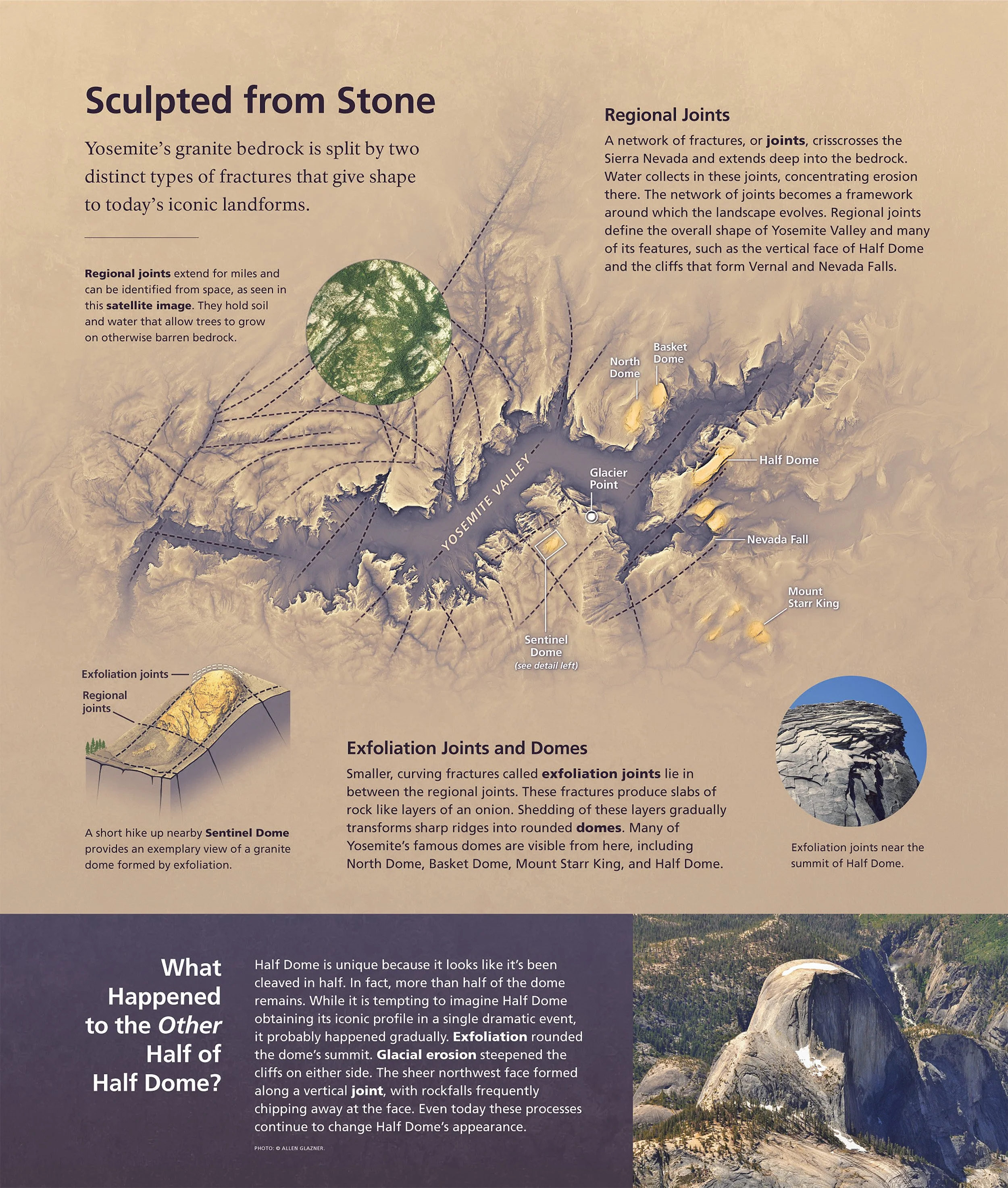
Perhaps the most novel graphic we put together is this unusual map of Yosemite Valley, rendered to emphasize large-scale joint patterns in the underlying bedrock and the domes that form between them. And check out that rare and incredible low-altitude aerial shot of Half Dome! It was taken by Allen Glazner while gathering the LiDAR data used in several of these renderings:
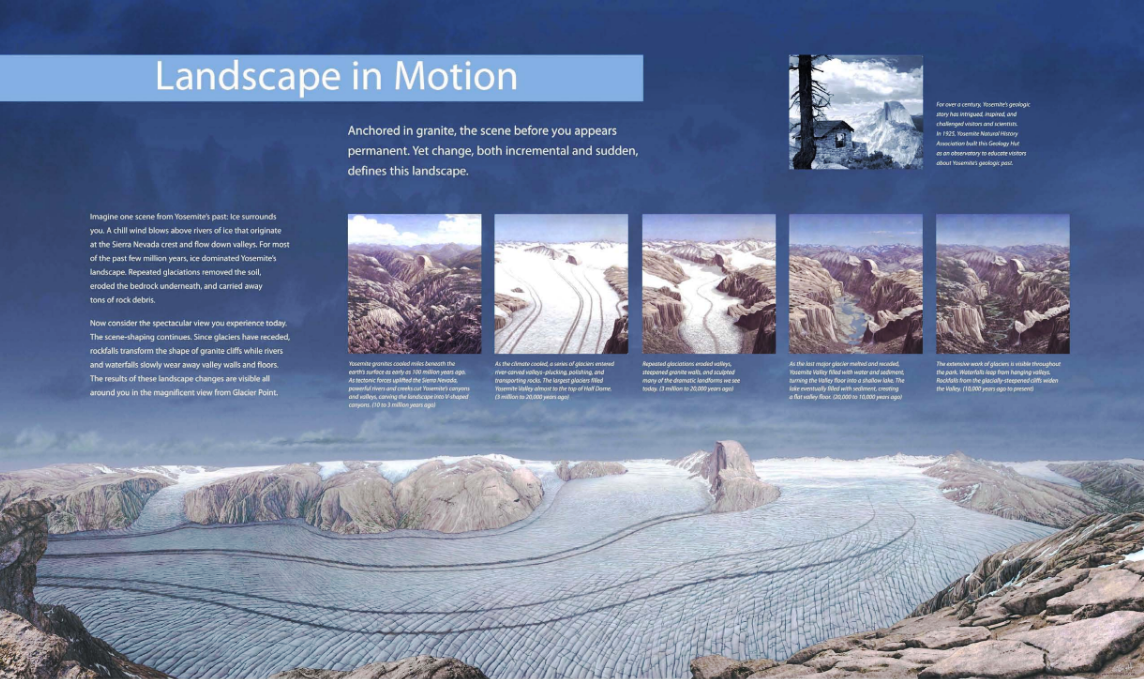
No overview of Yosemite geology would be complete without its glacial history, and what better place than here at Glacier Point? For this exhibit, we revised the earlier illustration to incorporate some new details based on Greg Stock’s recent field work and USGS map.
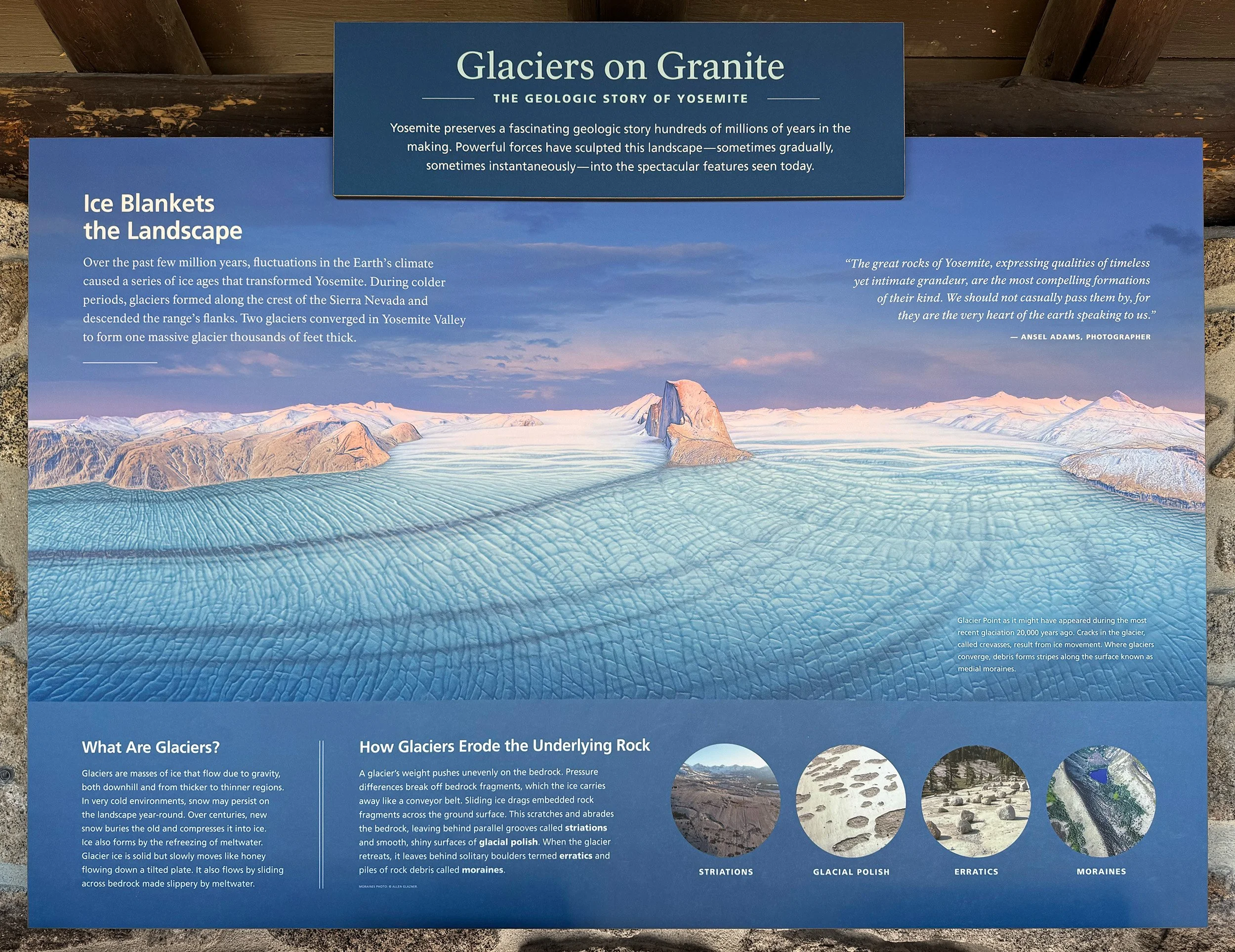
The scene is brought to life with surface details–crevasses, moraines, trimlines, ogives, meltwater rivulets, even a small rockfall below the face of Half Dome–that would likely have accompanied this mapped ice extent during the last glacial maximum, roughly 20,000 years ago.
Glacial geomorphologist and geophysicist Kurt Cuffey was on hand to consult.
To really nail down some of the trickier details, we went through numerous iterations of crevasse types and patterns in order to develop the hand-sculpted ice surface seen on this scale model of Yosemite Valley:
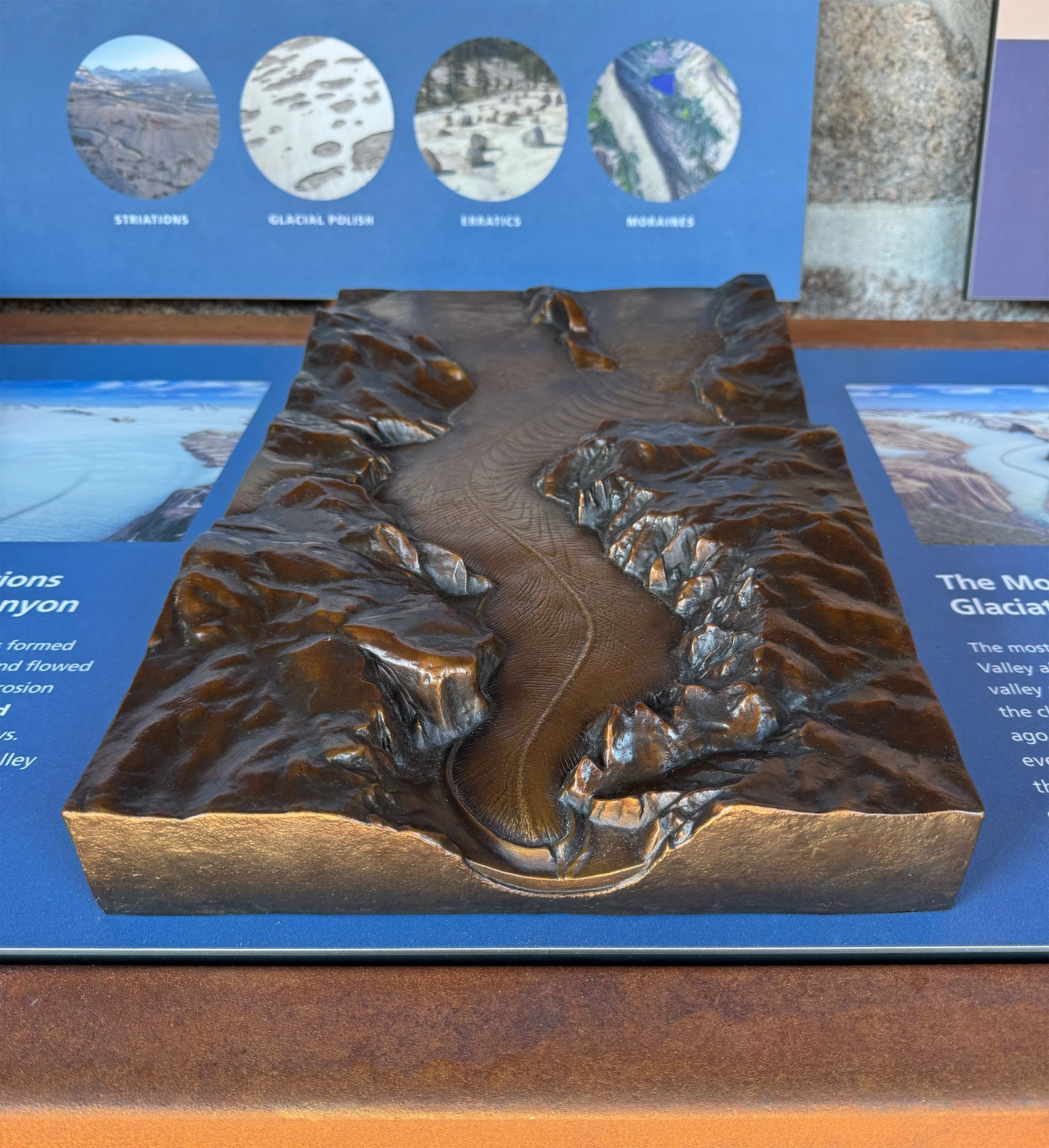
Photo: Eric Ball
This model is part of a series cast in bronze showing the evolution of Yosemite Valley’s famous landforms over time, starting with ‘fluvial Yosemite’, which involved building out the modern topography into plausible versions of the V-shaped river canyons that would have preceded it, governed by existing joint patterns in the bedrock. The models are presented alongside a matching series of historic paintings by Herbert Collins Sr. and Jr., each updated to reflect current understanding:
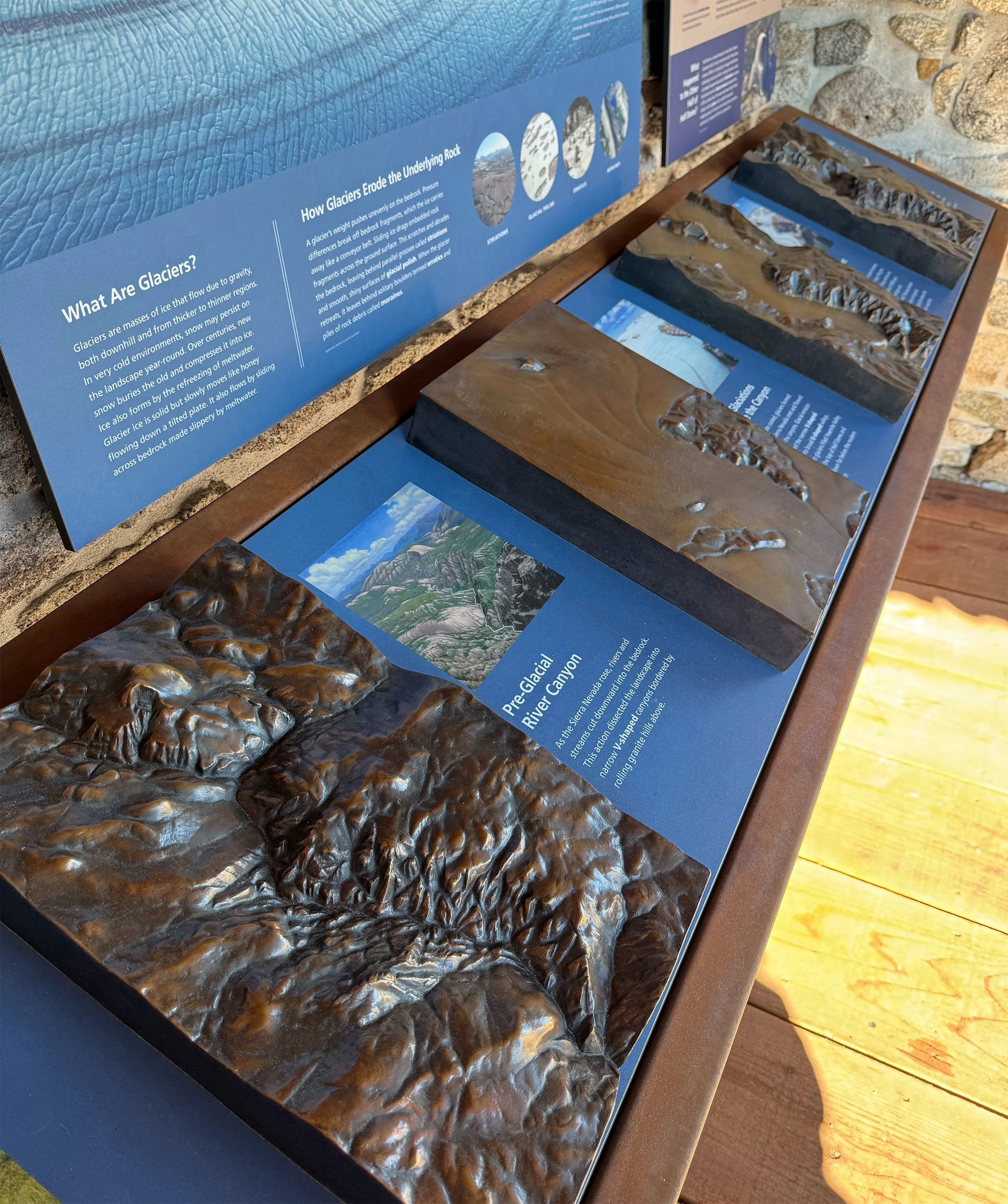
Photo: Eric Ball
Much has been written about Yosemite’s awe-inspiring landscapes, including famous treatises by luminaries such as John Muir and François Matthes. But modern-day park interpreters must rely on more concise explanations that reflect how little time the average person really spends reading about these things. So wherever possible, the Geology Hut exhibits are designed to show, not just tell. We’ve tried to incorporated rich visual details that go beyond basic descriptions to reward those curious individuals who occasionally make it all the way to the end!
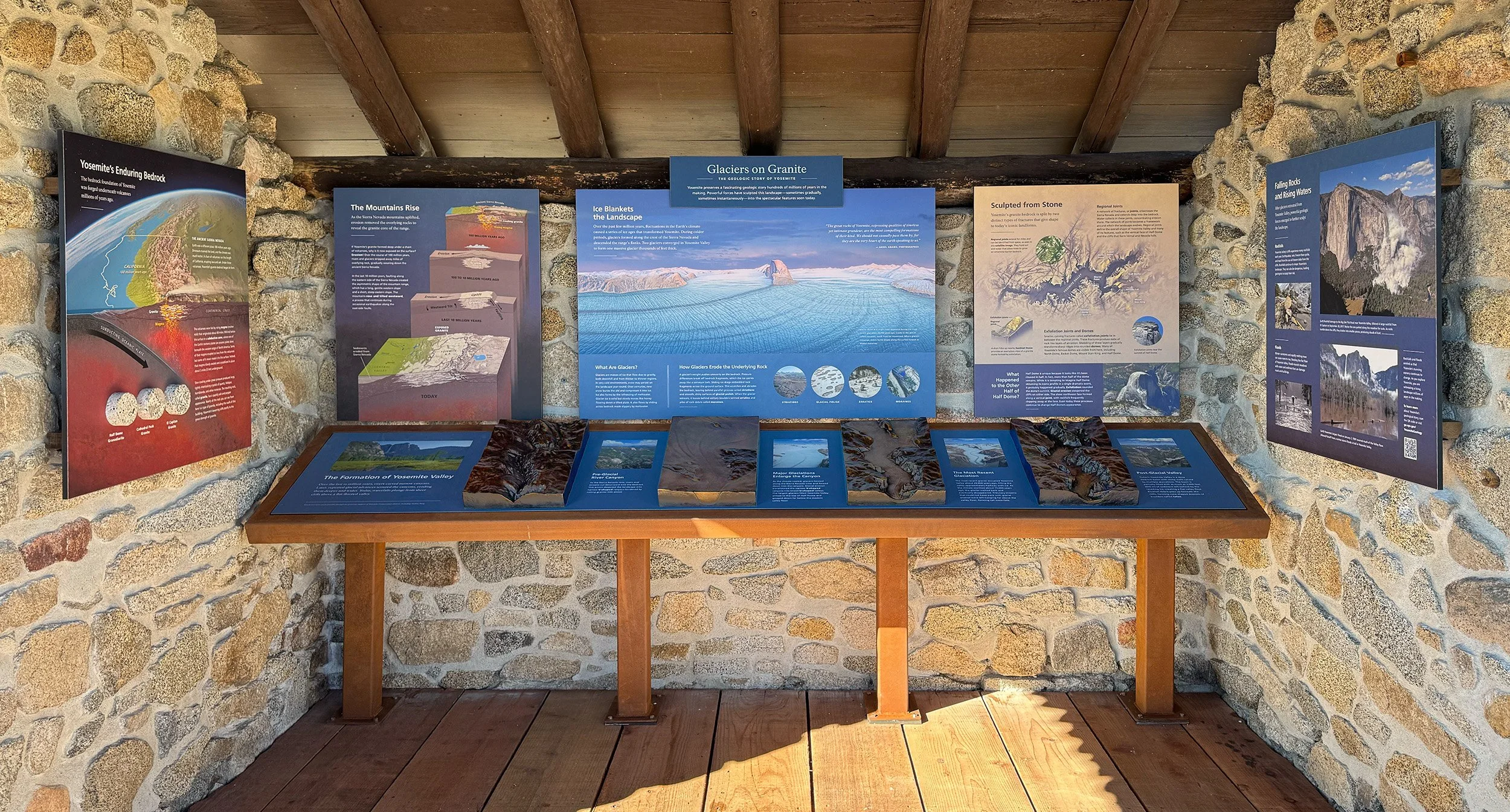
Photo: Eric Ball
Special thanks to designers Eric Ball and Rick Morris, exhibit specialists Becky Latanich and Mary Orms, geologists Greg Stock, Allen Glazner and Kurt Cuffey, ArtWorks Foundry, Nadine Tang and the Yosemite Conservancy.